App Concept: here
Product Design
During disasters, identifying those in need of help as well as those who can and want to offer assistance is crucial. To address this challenge, I developed an app concept called "here" that utilizes a Tinder-like system to gather both pieces of information. The app not only provides support during emergencies, but also creates ongoing value by providing useful information beyond crisis situations. By leveraging user input, the app helps to build a community of support that can make a real difference in people's lives.
Problem & Hypothesis
I looked at the communicative problems that arise in this context, especially as a public body.
From my point of view, there are, explicitly, three of them:
- We have to find out where help is needed, and who needs help.
- We have to coordinate help among the population and refer people who are willing and able to help.
- We have to make information accessible. It must be as easy as possible to find out about the current state of the situation – on site but also remotely, of course.
Last but not least, I looked at apps that are explicitly designed for such situations - in addition to things like WhatsApp or Telegram, for example. The most likely to be mentioned here are Katwarn and Nina - both of which, however, only cover part of the problems just described.
Process & Results
So I thought about what a solution could look like that would take a holistic approach. It is important to note that it is about the provision as a public agency and the coordination from the public side. Not "peer-to-peer" help.
Whether the whole thing is a separate app or based on KatWarn or Nina - I don't want to narrow it down any further at this point. In addition, legal issues or things like data protection were secondary for me for the time being.
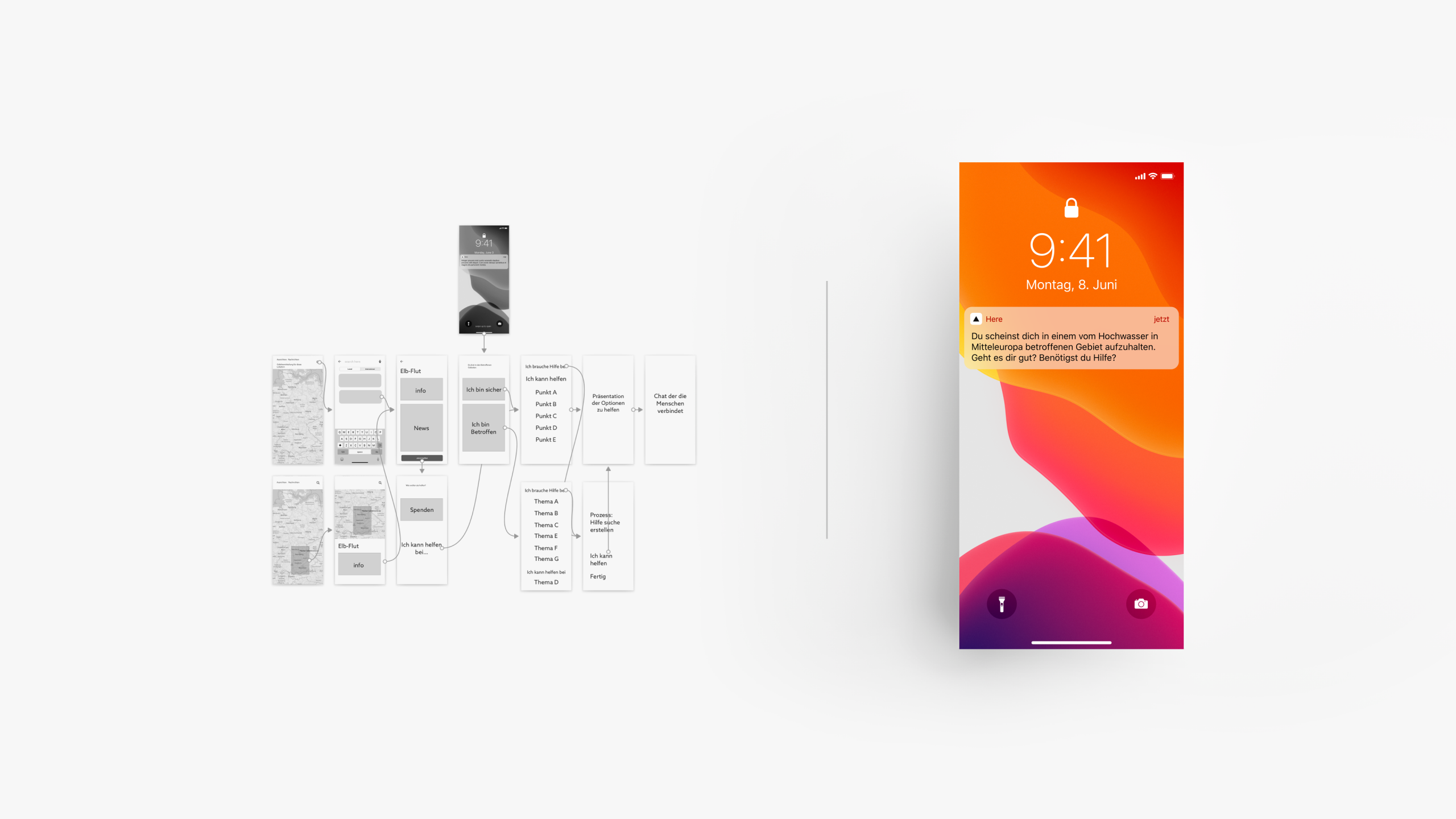
For classification: we are in an affected area, but we are fine, so we don't need help – but we can and want to help. Based on our location, we get a push asking us how we are. When we open this push, we get a question asking if we are okay or if we need help.
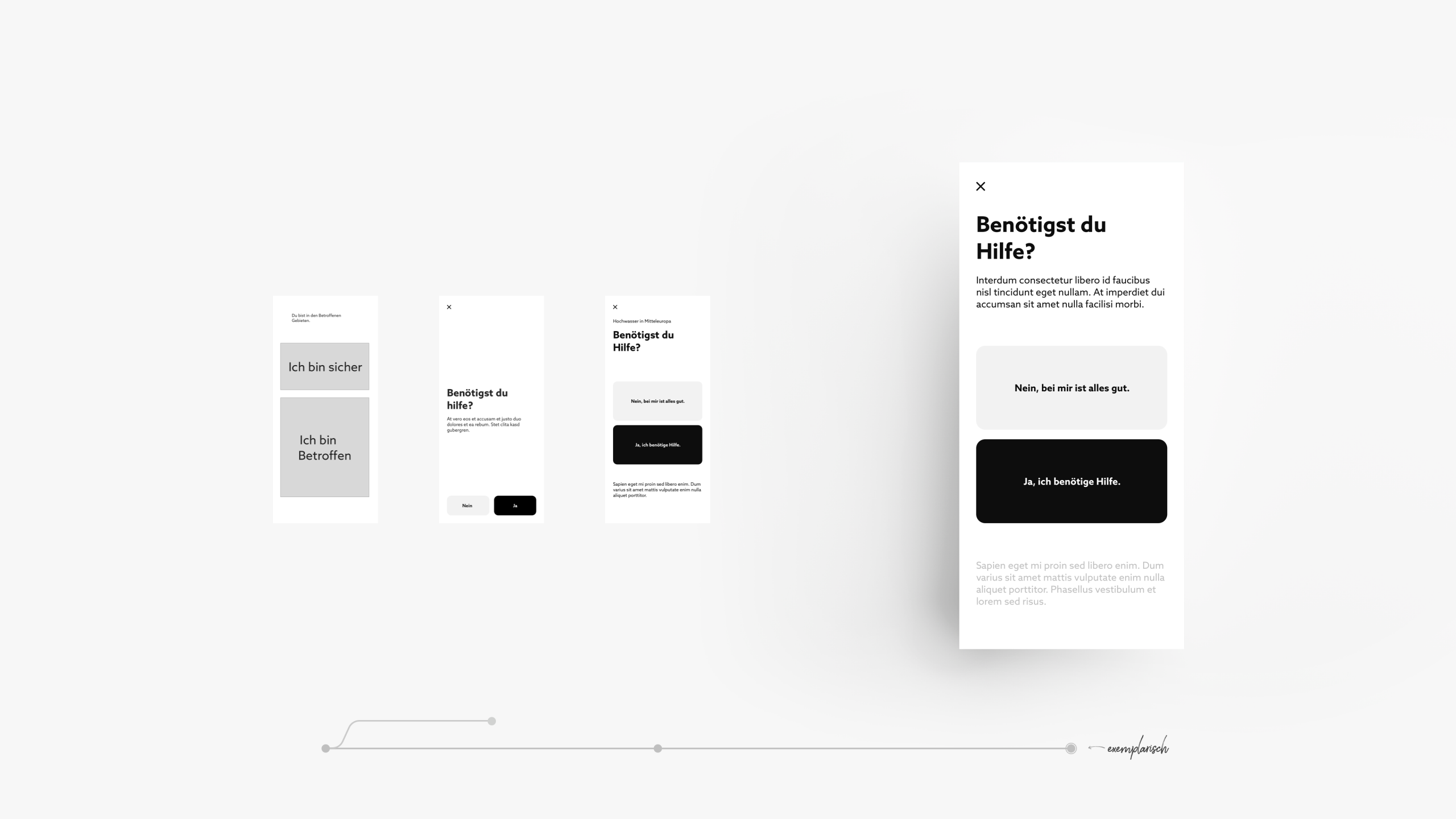
On the right, you can see the final screen.
On the left, some exemplary steps of the design process.
The graph below describes the process using the screens shown as examples.
To further clarify the context of the screens shown: No, we are fine. We don't need any help.
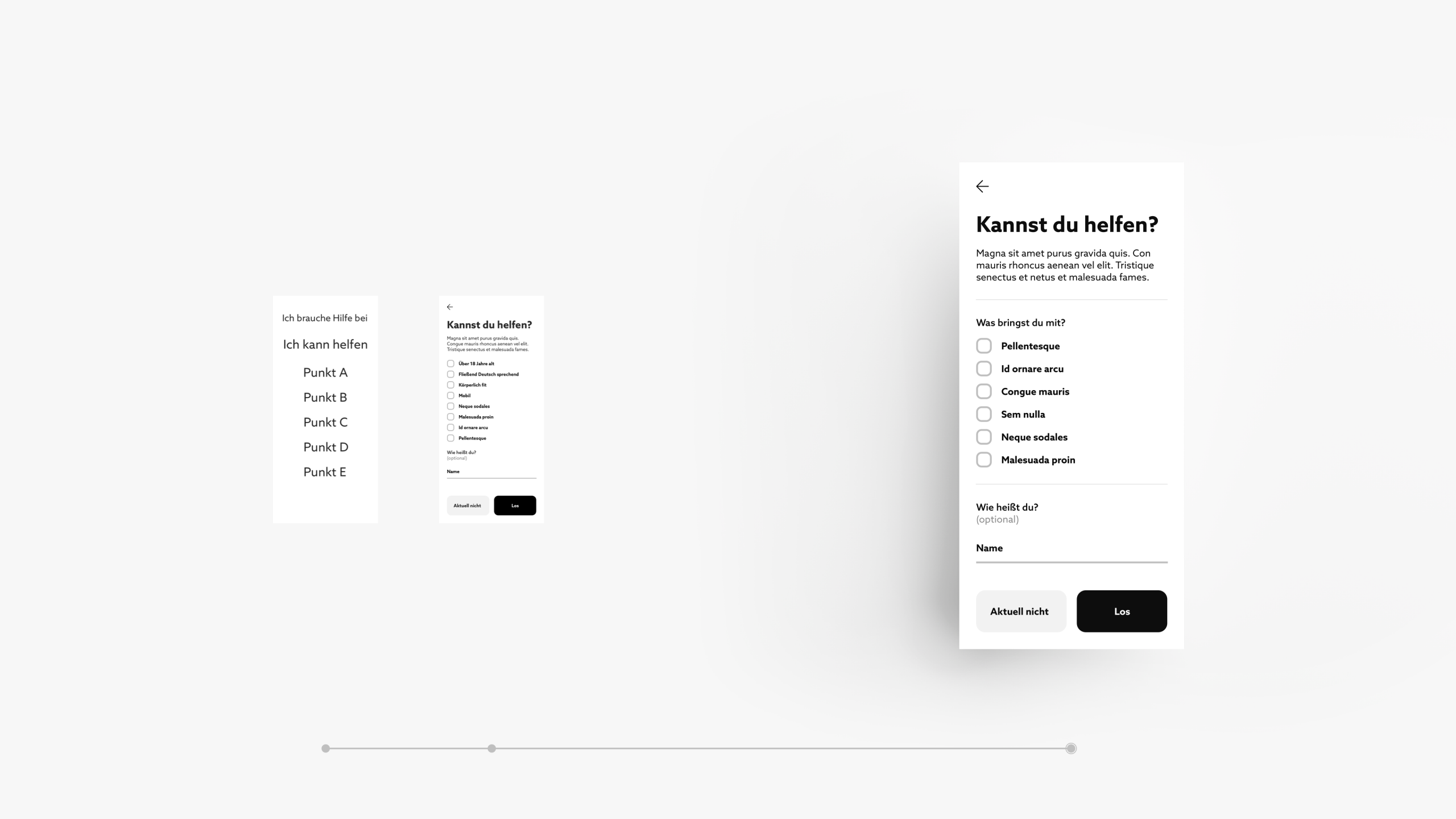
We indicate what we can contribute.
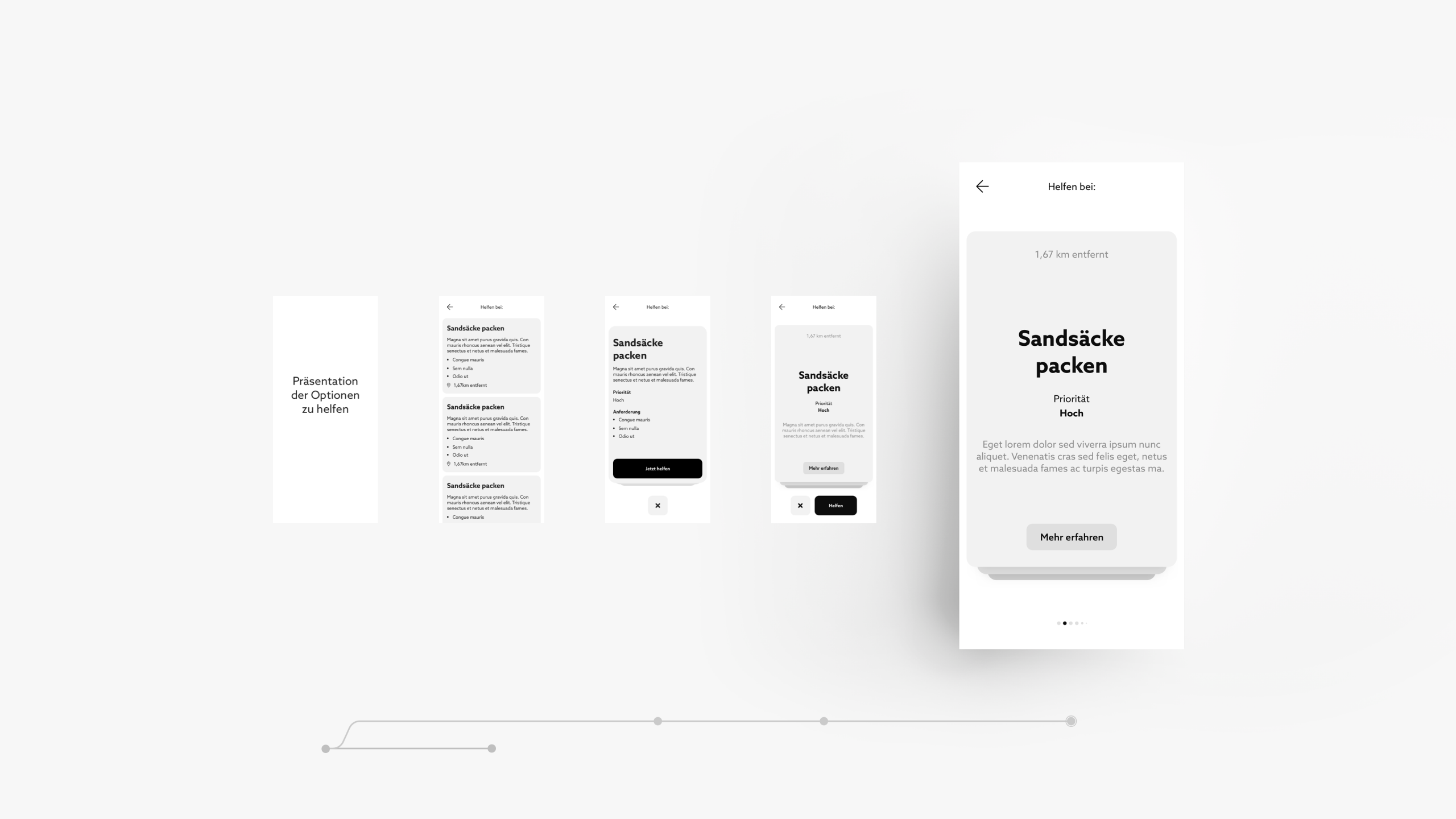
Based on this, they are presented with different ways to help.
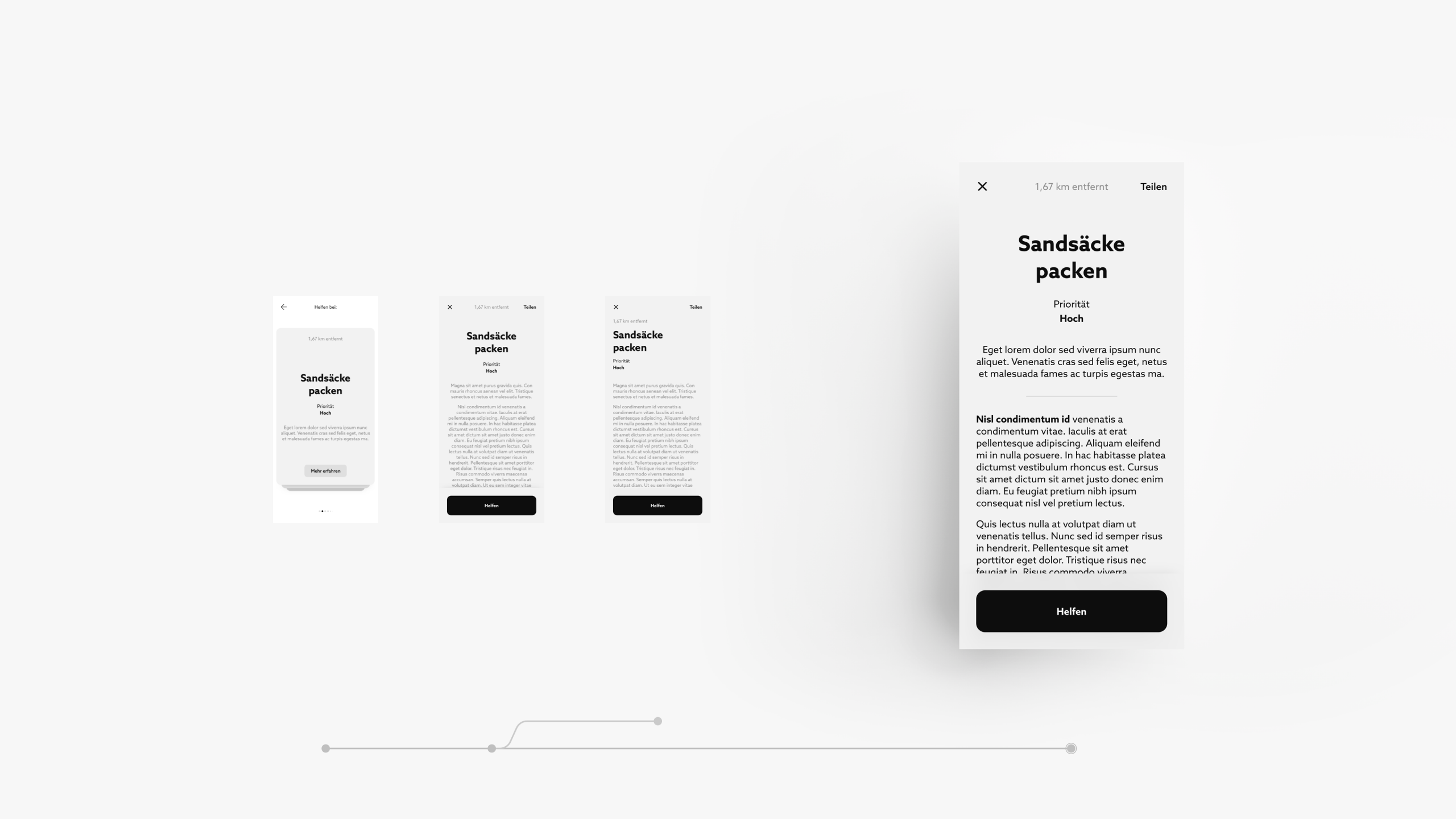
Take a closer look at one. Decide to help.
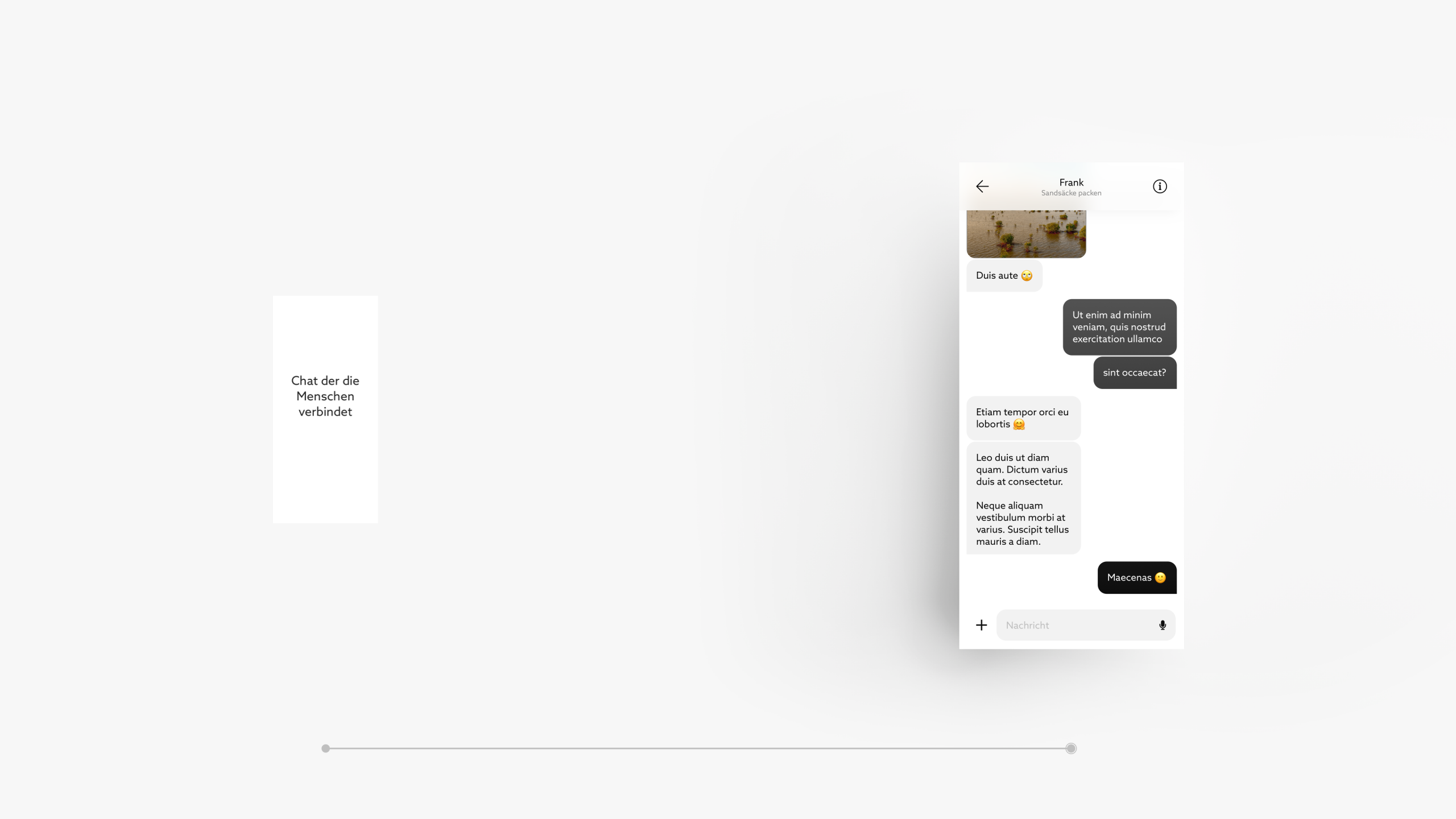
Are now being picked up and briefed via chat by a coordinator.
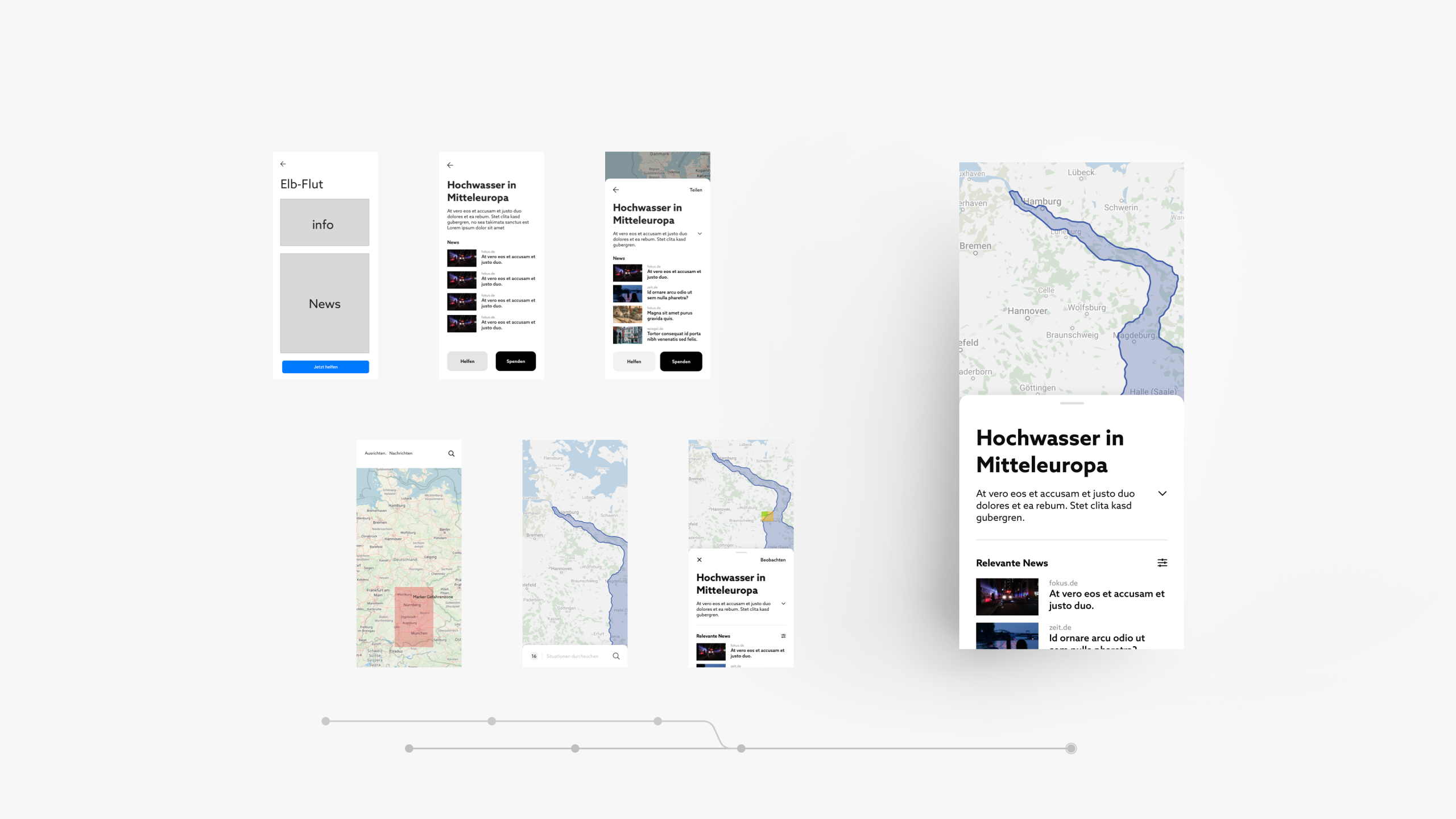
A bit out of the scenario – the map serves as a central overview and navigation. We can call up all relevant details about a situation here and also have the option to donate or help.
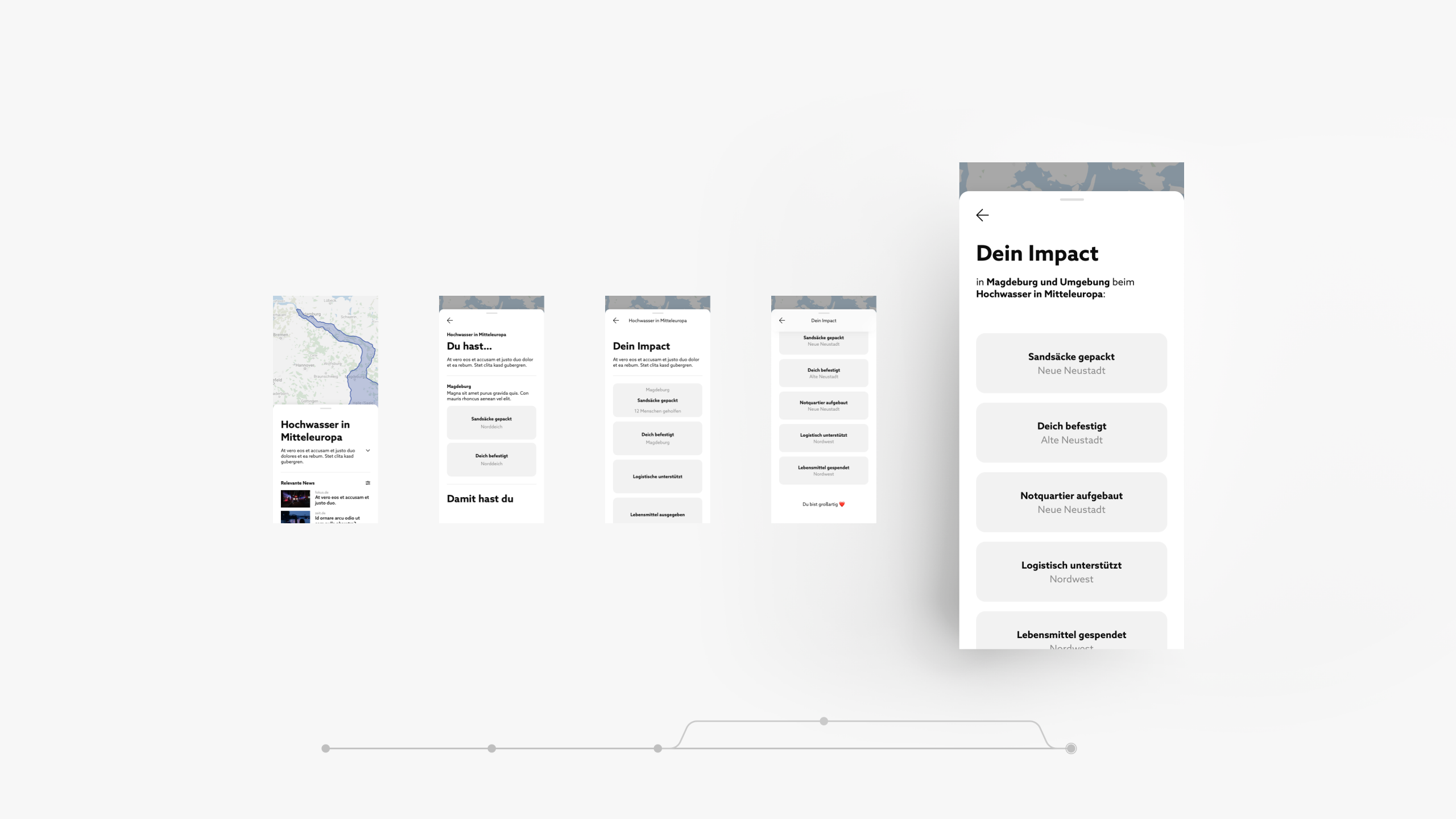
Last but not least – a history of our engagement. This is simply important in order to remain aware of our own actions, which should motivate us. It is also a nice place to say thank you.
Felix Kalkuhl © 2025 — Imprint (German)
